


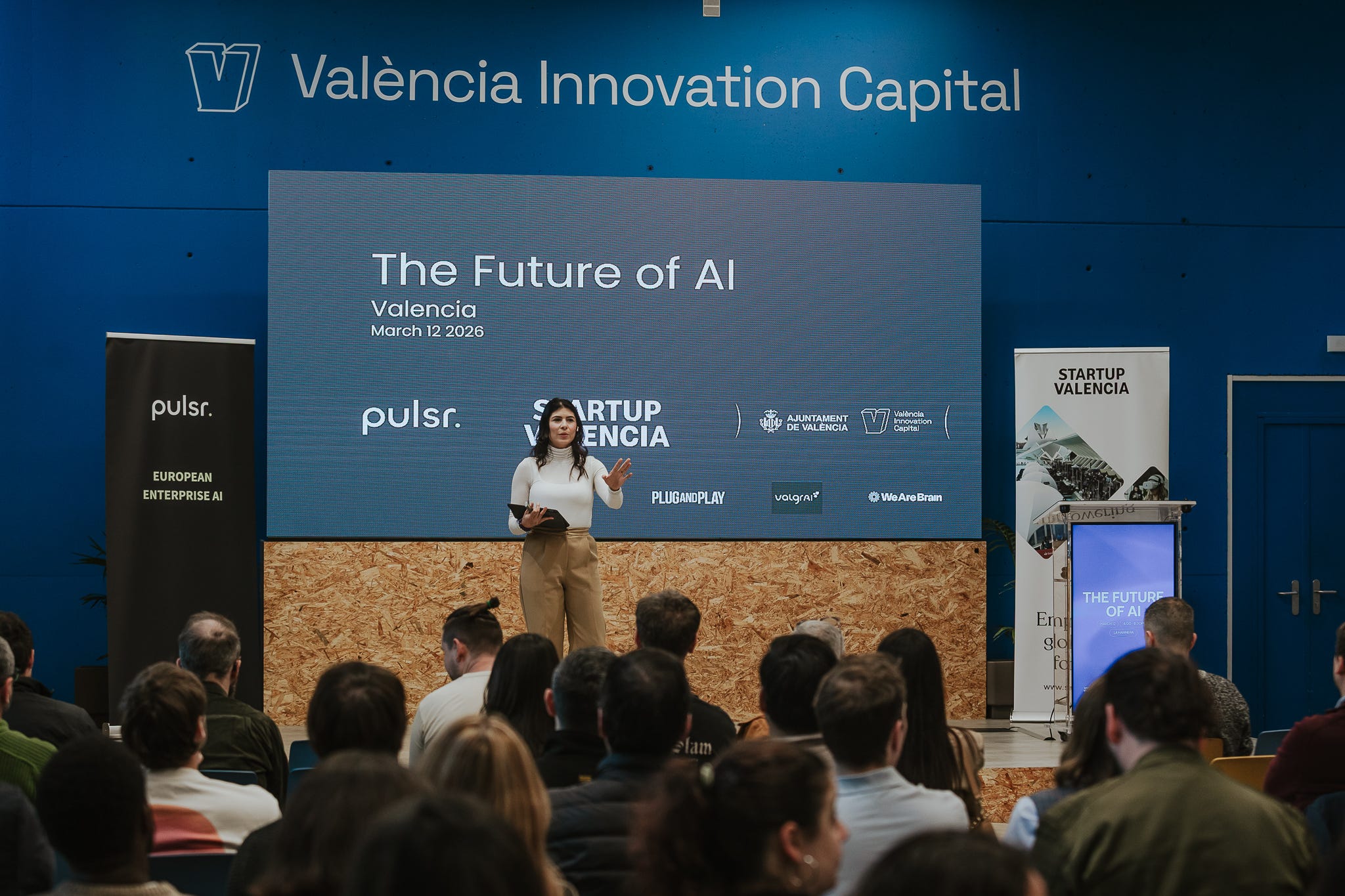
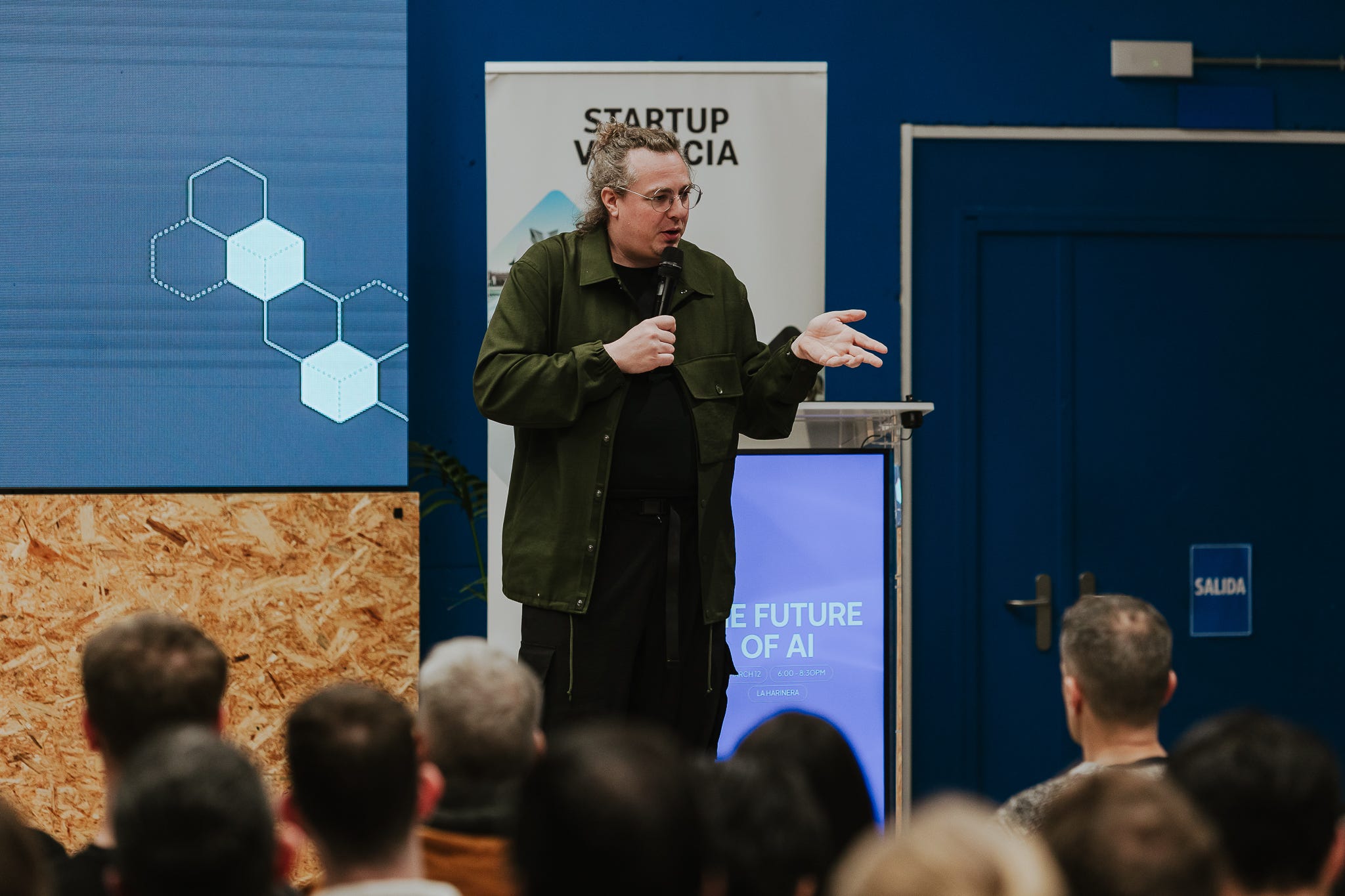
Last Friday I walked into The Future of AI — a new event series at a local startup hub here in Valencia. One of the organizers opened with something that immediately earned my attention: “There’s too much AI hype. Too many headlines. It’s hard to tell what’s serious and what isn’t. So we’re going to do something radical — talk specifics.”
No manifestos. No evangelism. Just practitioners dissecting what’s actually happening.
I took notes. These are them.
Note #1: The footprint you’re not tracking.
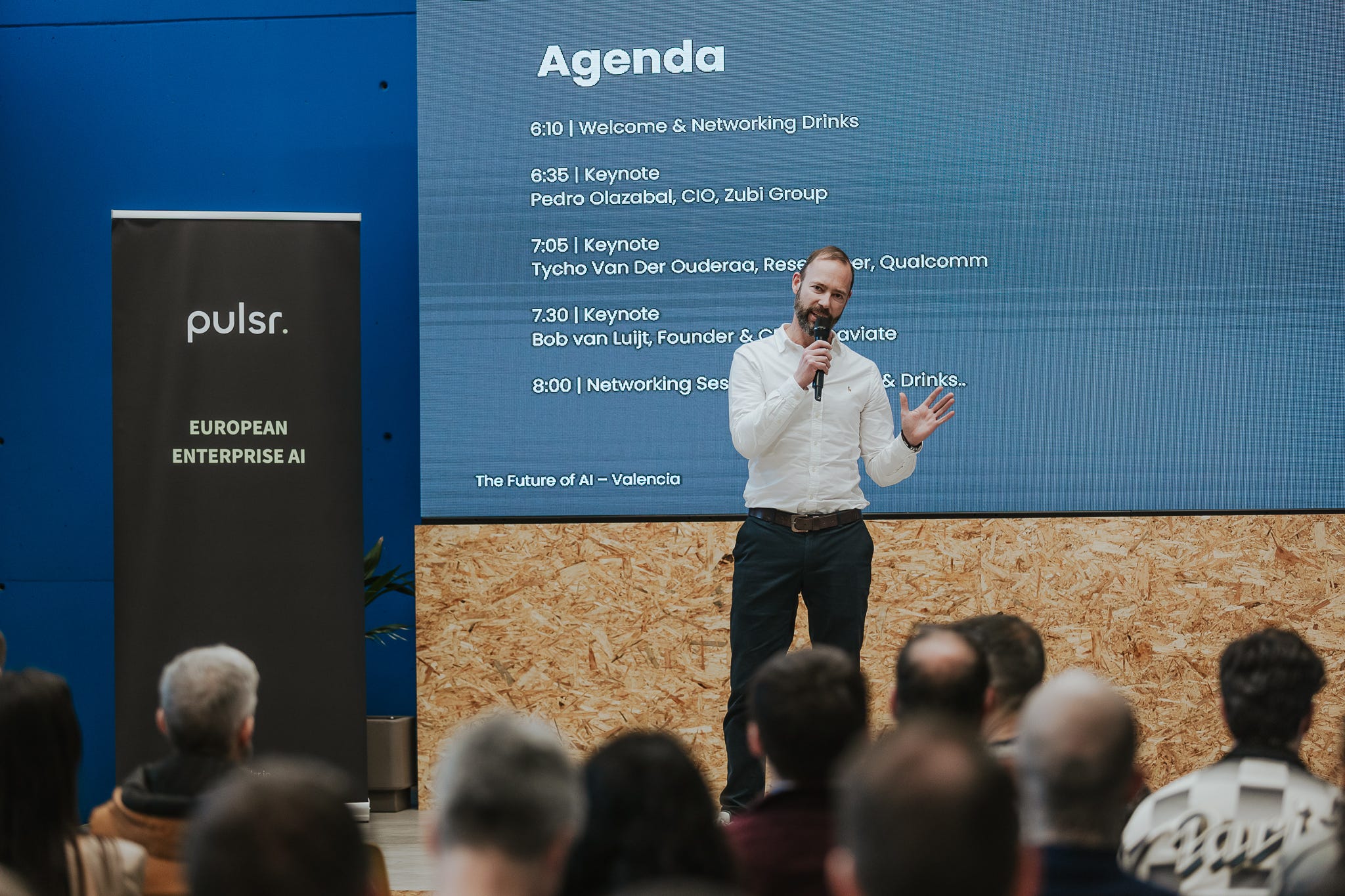
Speaker one reframed AI not as a software product, but as an energy problem. Every query, every generated image, every “make it more punchy” prompt — there’s an electricity cost behind it. And when AI reaches full-depth penetration across industries and geographies, the countries leading the race — the US and China — won’t just be competing for chips. They’ll be competing for power grids.
The real insight wasn’t doom. It was this: alongside the companies building AI products, an entirely new layer of infrastructure businesses will emerge — companies that don’t build models but keep them running. Cooling, power, logistics.
The sharpest line of the evening came during the Q&A. Someone pointed out that the next unicorn might not be an AI company at all. It might be whoever solves energy-efficient cooling for data centers. Not the brain. The body temperature.
Note #2: What do AI and crystals have in common?
Speaker two opened with this question and I genuinely didn’t know where it was going.
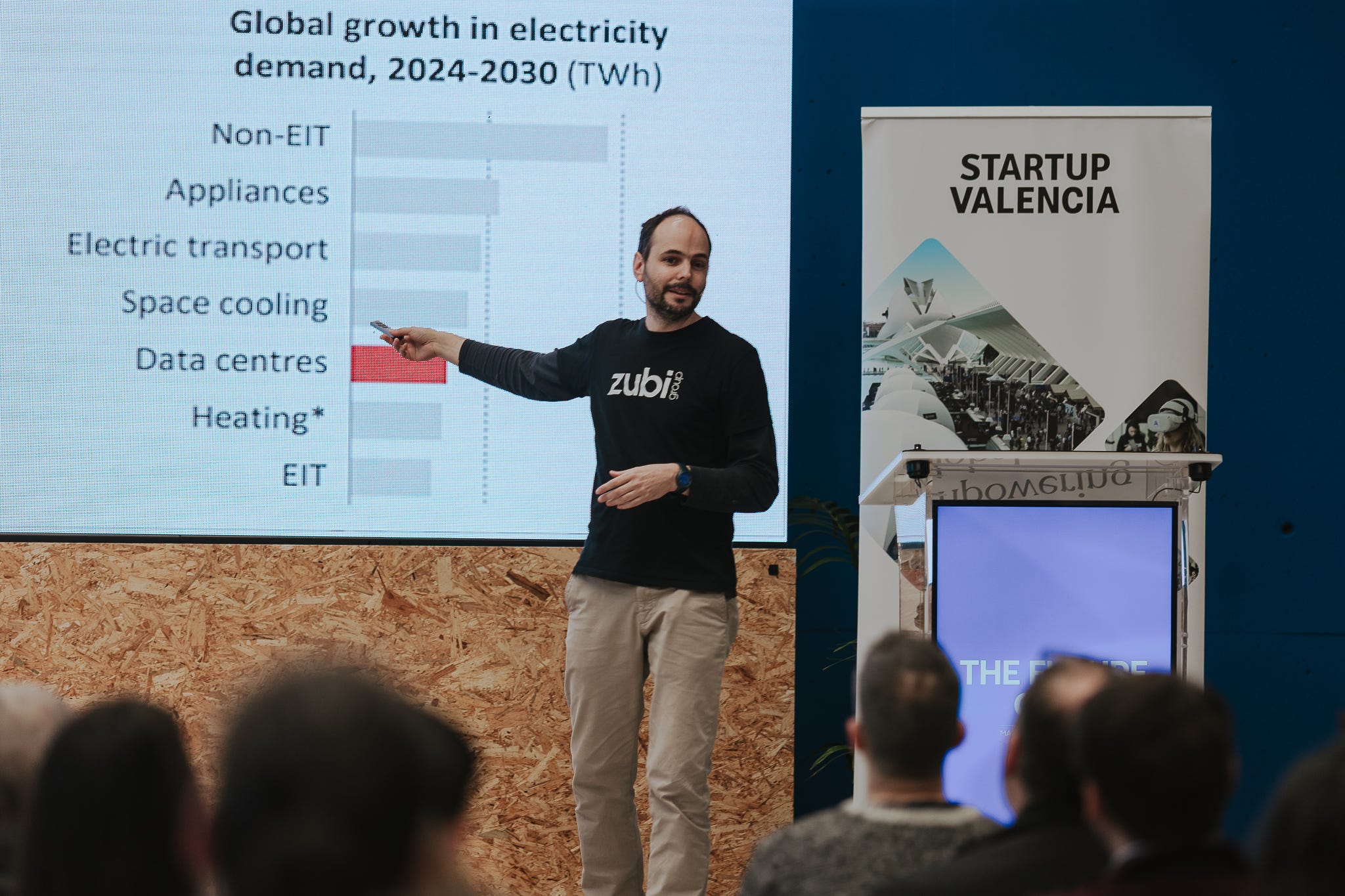
Here’s where: when you compress an AI model’s weights to make it smaller and faster, the standard method maps data points onto a uniform grid — think of it as a flat, square lattice. Simple, but wasteful. A lot of bit-strings end up representing points that don’t even exist in the actual data distribution.
The alternative? Lattice vector quantization — arranging data points in crystal-like geometric structures (hexagonal, or even 8-dimensional lattices like the E8 Gosset lattice). It’s the same principle nature uses to pack atoms: a crystal is denser and more efficient than a cube. Applied to AI, this means smaller models with less quality loss. There are multiple NeurIPS 2025 papers on this exact approach — and it’s part of a bigger push toward on-device AI: models that run autonomously on your phone or laptop without calling a server.
The endgame isn’t AI in the cloud. It’s AI in your pocket.
Note #3: Read the papers before you read the headlines.
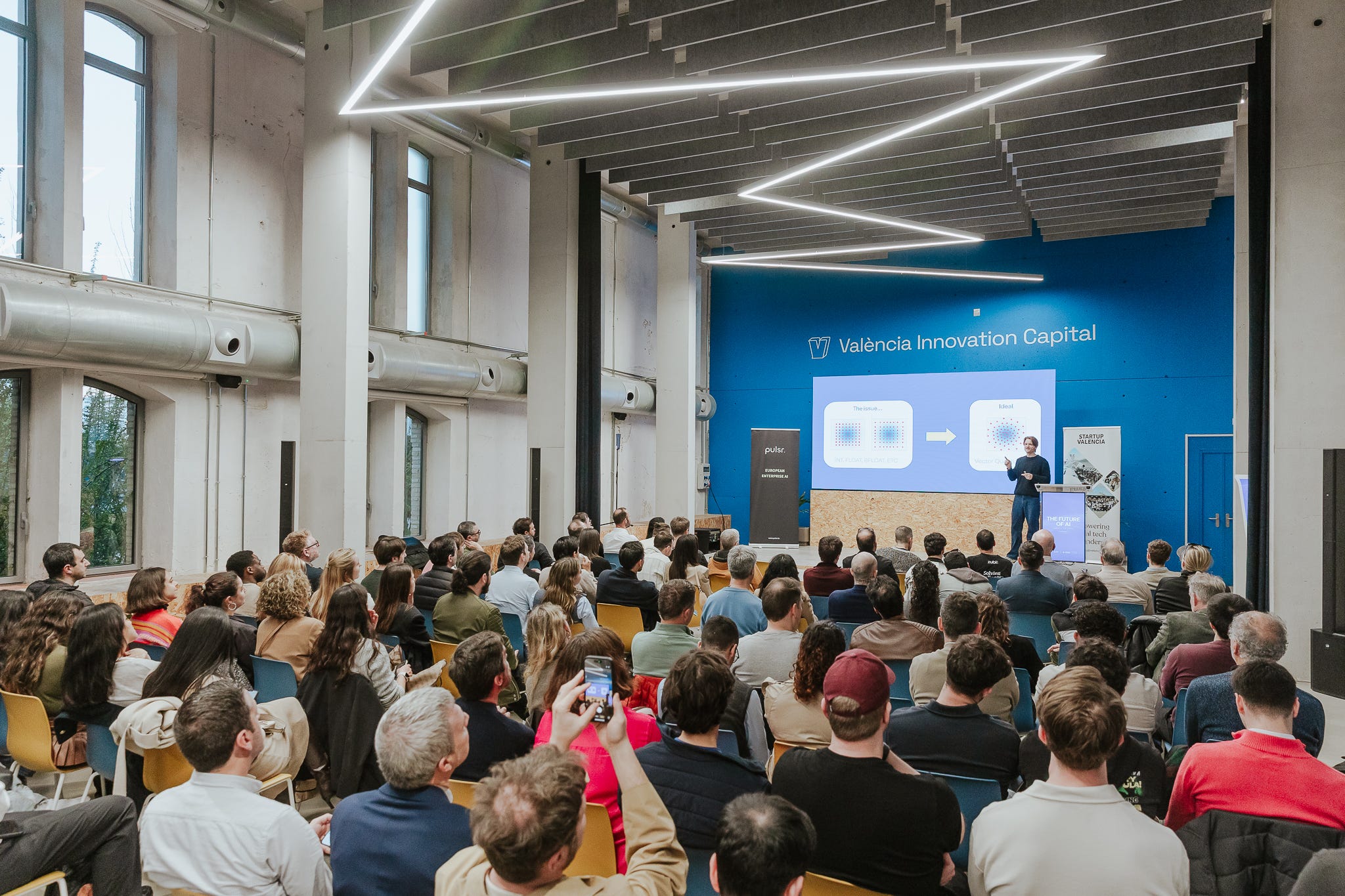
The final speaker delivered something between a talk and a stand-up set. The core message: the most transformative AI breakthroughs are rooted in research papers, not product launches. Transformers started as a paper. Diffusion models started as a paper. RLHF started as a paper. The distance between a white paper on arXiv and a feature in your favorite app is shorter than most people think — and longer than most founders admit.
The argument: before you take AI to the masses, take it to the science first. Understand what’s proven, what’s speculative, and what’s marketing dressed as innovation.
Post-event note (written at 1am):
That last point hit personally. I walked home and immediately fell into a rabbit hole on a topic that’s been pulling at me for weeks: the Creativity Gap in modern LLMs. There’s a growing body of academic research — from NeurIPS best papers to Science Advances to CHI — showing that AI models are getting smarter but also narrower. They raise the floor for average creative output while compressing the ceiling. The implications for everyone in the creative industry are massive. I’m reading through 15+ papers on this right now and will publish a full breakdown soon.


The bigger thought:
It’s Friday night. I could’ve gone to a concert or a movie. Instead, I walked to a coworking space and left three hours later with a head full of lattice structures and energy footprints.
I genuinely believe the quality of a city is no longer measured by its nightlife alone — but by whether you can walk out your door on a Friday and stumble into a room full of people building things.
Valencia is becoming that city. And the fact that the ratio of builders to consumers in rooms like these keeps growing is, to me, the most optimistic signal of 2026.
More notes from the next session soon.
Sergey Vovk is the founder of VOVK (Creative) Consulting and co-founder of Kyiv Academy of Media Arts (KAMA). He writes about what happens when the creative industry learns to speak machine at aibubbledotcom.com.